
Cook County
Remodeling contractor in Evanston, IL
Evanston houses run from 1860s frame Italianates on the ridge to 1920s brick bungalows and two flats by the Chicago border. We remodel kitchens, bathrooms and basements, build additions and pools, and handle the City permit and inspections.
- Permits
- City of Evanston Building and Development Services Division (Community Development Department)
- Contractor registration
- Evanston requires every contractor working under a permit to be registered with the City before the permit is issued, with proof of insurance and, for state regulated trades, a copy of the state licence. Source
- ZIP codes served
- 60201, 60202
Permits in Evanston
Building permits come from the Building and Development Services Division, part of the Community Development Department at Morton City Hall on Davis Street. Applications go in through the City's online Citizen Portal and plans are submitted electronically. Paper plans are not accepted. The City quotes four to six weeks for a standard building permit and a few business days for simpler express permits.
Evanston requires every contractor working under a permit to be registered with the City, general contractors and trades alike, with proof of insurance. State regulated trades must show their state licence and electricians need a licence from a testing municipality. We register before we pull. The registered contractor for each trade also has to be on site for that trade's inspection.
Two local rules surprise people. The permit has to be posted within 48 hours where it can be seen from the public way. Work hours are 7am to 7pm on weekdays and 8am to 5pm on Saturdays.
What the houses are like
Evanston is old and almost fully built up. The National Register nomination for the Ridge Historic District describes houses from the 1860s to the late 1920s, Italianate, Second Empire, Stick Style, Queen Anne, Shingle Style and Prairie School, often side by side on one block. Frame houses predominate, a legacy of lumber shipped in to the Davis Street pier.
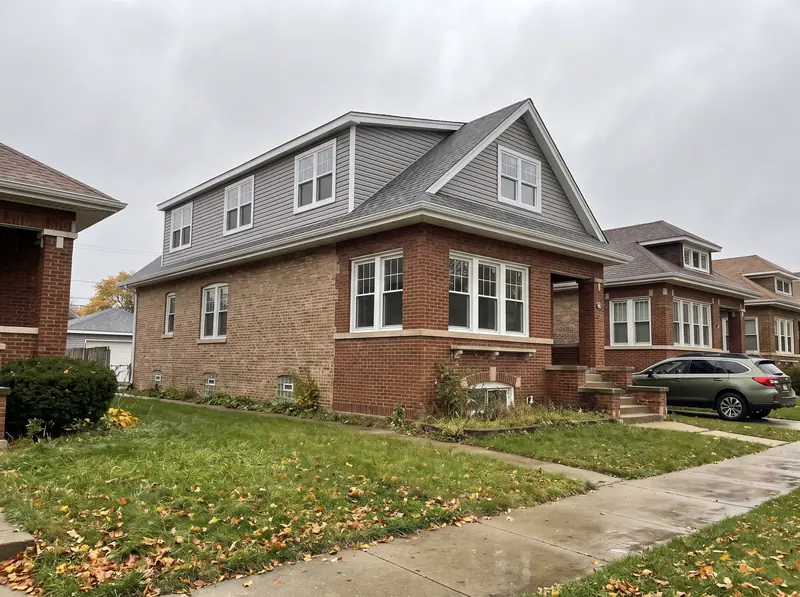
The Lakeshore district, between Northwestern and Calvary Cemetery, adds Tudor and Georgian Revival houses to the Victorian mix, with stucco and half timbering showing up often. Further south, the Oakton Historic District records the 1913 to 1940 layer: Chicago bungalows, Craftsman houses, Foursquares, Dutch Colonials, Tudor Revival, and brick two flats. Of its 203 primary buildings, 54 were built as two flats. We work across 60201 and 60202, lakefront to west side.
Kitchens and bathrooms in older Evanston houses
In houses this age, expect plaster, earlier remodels layered on top of each other, and pipes that have been moved more than once. Evanston's version of the residential code adds a rule that shapes kitchen and bathroom layouts: any wall holding plumbing, mechanical piping or ductwork must be framed with members at least five and a half inches deep. A new wet wall means 2x6 framing, which costs a little floor space in a small bungalow bathroom.
Plumbing follows the Illinois Plumbing Code as adopted by the City. Electrical, plumbing and HVAC work each need a City worksheet signed by the contractor doing that work before the permit is issued, so the trades are lined up before demolition, not after.
Basements and the combined sewer
All of Evanston is served by a combined sewer that carries both sewage and storm water. The City says most of it is 80 to over 100 years old and over 60 percent of its 144 miles is 12 inch pipe or smaller. Sewage backing up into basements was common in heavy rain until the Long Range Sewer Improvement Program, built between 1991 and 2008, added deep relief sewers and restrictors in street and alley inlets.
The City is clear that private sewer laterals still fail, or get overwhelmed by roof water, and it recommends that downspouts discharge to the ground rather than into the lateral. Before we finish a basement we look at the floor drains, the lateral and the downspouts. For new construction Evanston requires overhead plumbing, with below grade fixtures pumped up from an ejector pit.
Additions and lot rules
Most houses sit in the R1, R2 or R3 districts. Building lot coverage is capped at 30, 40 and 45 percent respectively, and impervious surface at 45, 55 and 60 percent. The rear yard setback for the house itself is 30 feet in all three. On a deep Ridge lot that leaves room to build. On a 40 foot lot in south Evanston it often does not.
Small overages can go through a minor variation, which the City says is mostly used for additions and detached garages. Larger ones need a hearing at the Land Use Commission. Evanston also requires sprinklers in new one and two family houses. Additions are exempt unless the work removes half or more of the existing structure, at which point the code treats it as a demolition.
Historic districts and landmarks
Lakeshore, Ridge and Northeast Evanston are local historic districts, and the City counts over 850 individual landmarks, about 430 of them outside a district. Exterior work that needs a permit and can be seen from a street, alley or sidewalk needs a Certificate of Appropriateness before the permit is issued. Interior work is outside the Preservation Commission's purview. For lakefront owners, the ordinance says the lake does not count as a public way.
You can check your address on the City's About My Place map under the Local Historic District and Historic Landmark tabs.
Pools
Evanston's zoning code allows a private pool in the rear yard of a residential lot, no closer than 10 feet to any property line, and the pool counts toward impervious surface. Inground pools need a building permit and the City has adopted the 2021 International Swimming Pool and Spa Code. Lot width decides most of these jobs.
Services
What we build in Evanston.
Kitchens, bathrooms, basements, additions and, where the lot allows, an inground pool.
Kitchen remodeling in Evanston
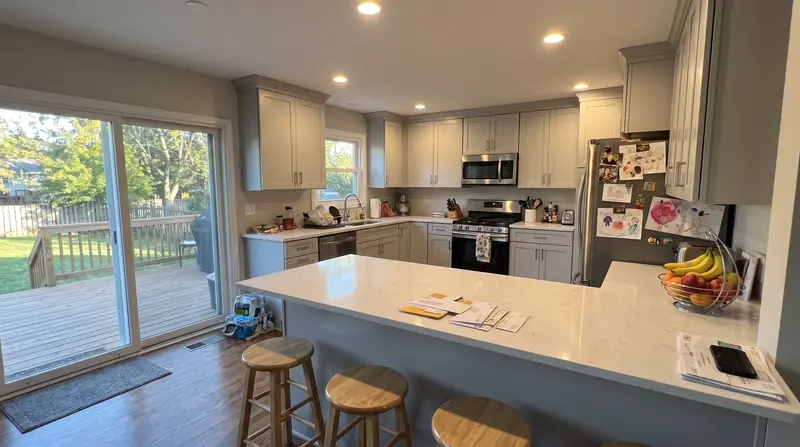
Galley kitchens in bungalows, two flat kitchens, walls opened up into the dining room.
In Evanston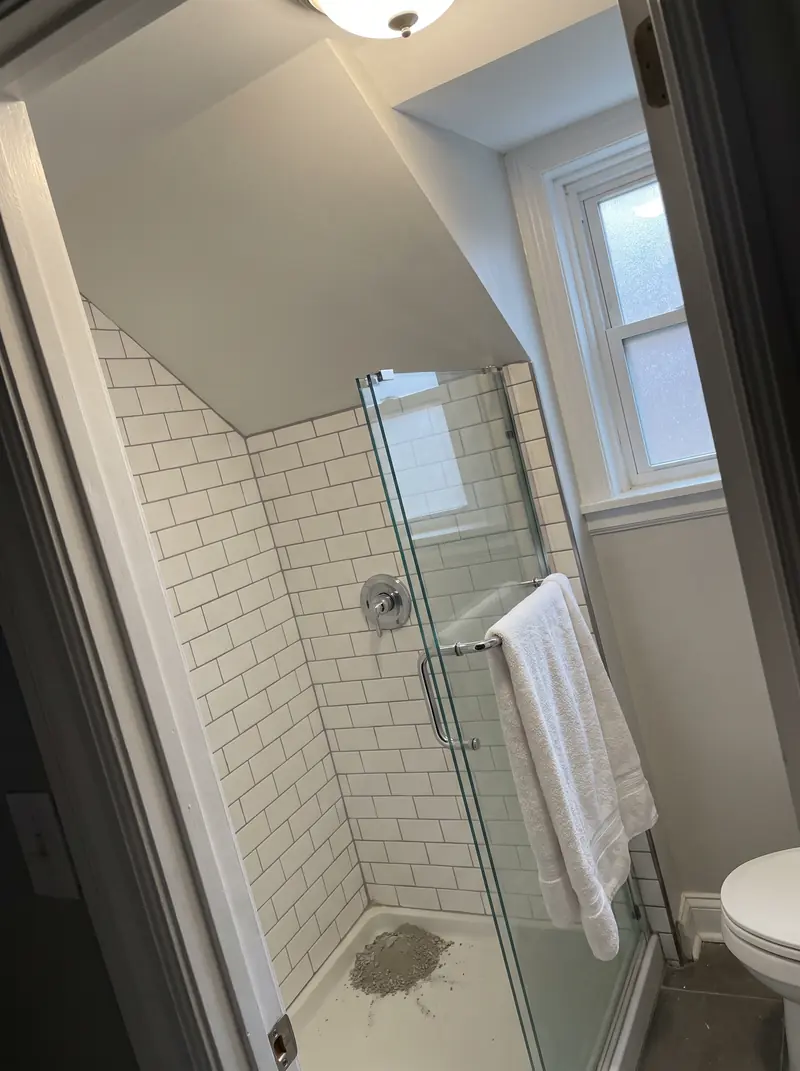
Bathroom remodeling in Evanston
Bungalow hall baths, cramped upstairs showers, tub to shower conversions.
In Evanston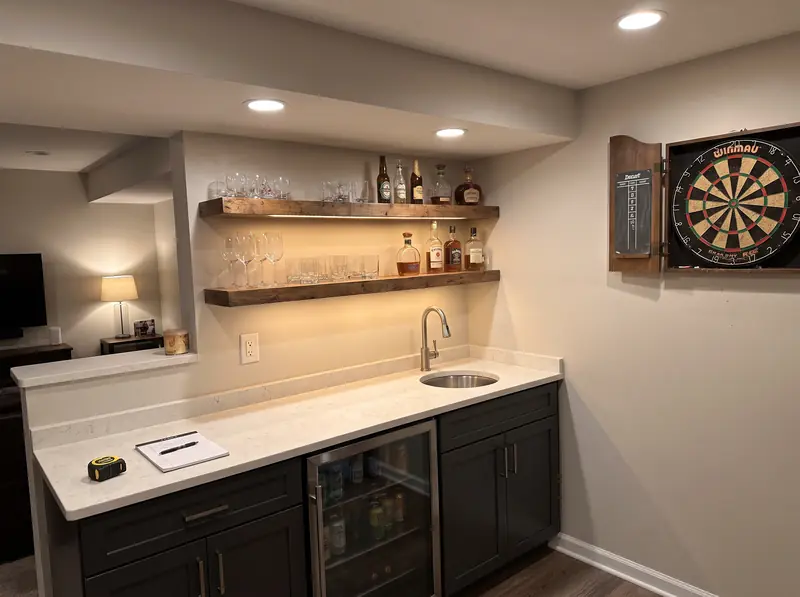
Basement finishing in Evanston
Family rooms, bedrooms with egress, basement bathrooms, wet bars, theatres and in law suites.
In Evanston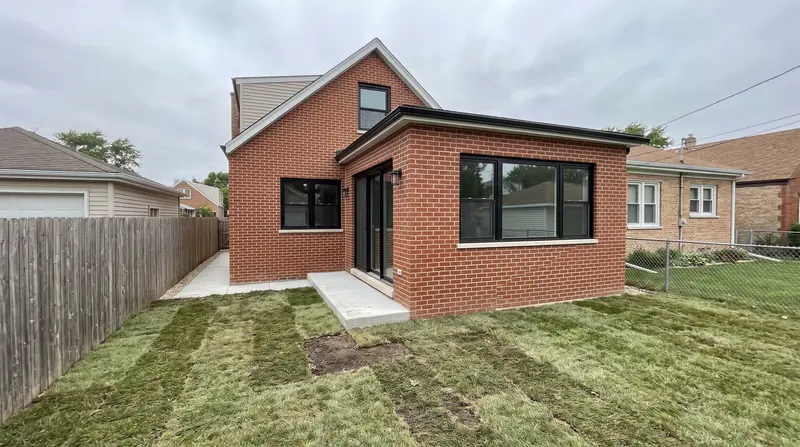
Home additions in Evanston
Rear additions, full width dormers, second stories and rooms over the garage.
In Evanston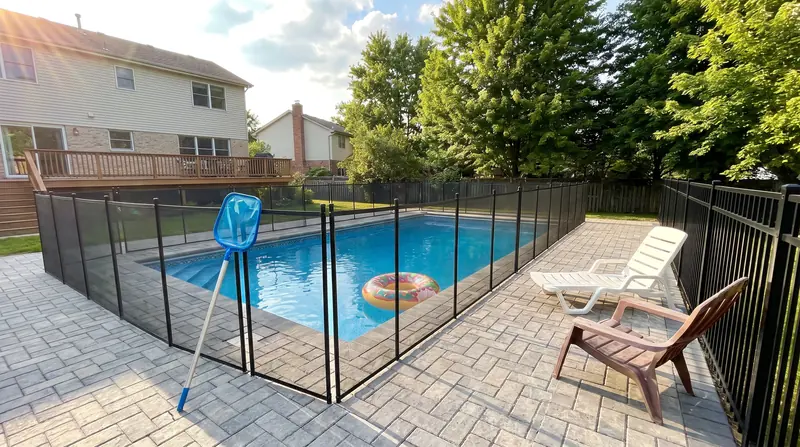
Inground pools in Evanston
Concrete inground pools in suburban back yards, from dig to first fill.
In EvanstonDoes my contractor need to be registered with the City of Evanston?
Yes. Every contractor working under an Evanston permit must be registered with the City. An owner occupant of a single unit house can act as their own general contractor with signed affidavits for any trade work they do themselves.
How do I find out if my house is in a historic district?
Enter your address in the City's About My Place map, open Property Quick Info and check the Local Historic District and Historic Landmark tabs. If it is, visible exterior work needs a Certificate of Appropriateness before a permit is issued.
My basement took on water. Is it the City's problem?
The City says clear water usually means storm water through window wells, cracks or a failed sump, which it cannot fix. Discoloured water with an odour points to sewage, and the City asks you to call 311 so it can check whether its sewer contributed.
Free walkthrough
A walkthrough in Evanston.
We look at what you want to change, tell you what the house and the town will allow, and roughly what it involves. Nothing to sign.
Call (773) 900-4815