
Cook County
Remodeling contractor in Tinley Park, IL
Tinley Park added more than 11,000 housing units between 1970 and 1994. A house from that stretch is now roughly 30 to 55 years old, and that age shapes every kitchen, bathroom, basement, addition and pool project here.
- Contractor registration
- Tinley Park requires every contractor on a permit to hold a village licence, or show proof of a state licence, before the permit is issued and before work starts. Source
- ZIP codes served
- 60477
Permits in Tinley Park
Permits come from the Building Department in Community Development at Village Hall, 16250 S. Oak Park Avenue, phone (708) 444 5100. You need a plat of survey with the work drawn on it, plus drawings, and you get a placard for the site and a sheet listing the inspections your job needs.
Every contractor named on a Tinley Park permit must be licensed with the village, or show proof of a state licence, before the permit is issued. Village licences run from January 1 to December 31, with renewals opening on November 1. We register before we pull. Homeowners can do their own work, except changing the electric service, which needs a licensed electrical contractor.
The village revised its adopted codes on July 20, 2026. Houses are now reviewed under the 2024 International Residential Code, the 2023 National Electrical Code, the 2014 Illinois Plumbing Code and the 2021 energy code.
What the houses are like
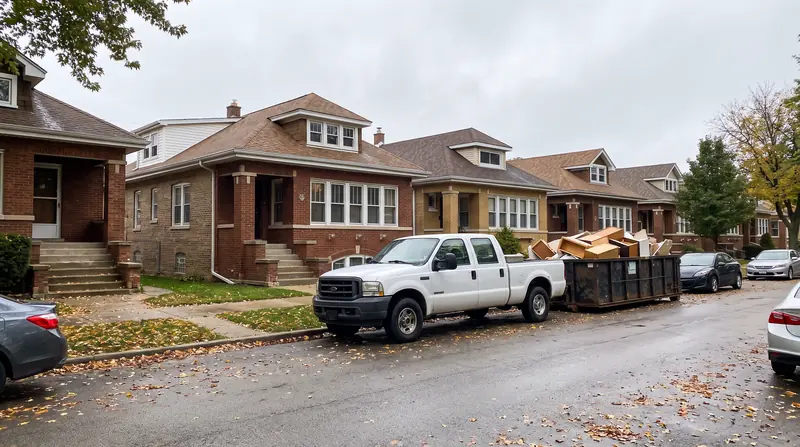
The Tinley Park annex of the Cook County hazard mitigation plan tells the story. Settlers arrived in the 1820s, the village was laid out as Bremen in 1853, renamed in 1890 after railroad station agent Samuel Tinley Sr., and incorporated at the train depot on June 27, 1892. In the late 20th century it spread west and south of the original town, and a small, densely built part sits in Will County.
That is why so much of Tinley Park is subdivision housing from the 1970s, 1980s and early 1990s. Newer subdivisions such as Sunset Estates on the east side and Brookside Glen Villas on the west side are still being built, and downtown is filling in around the Oak Park Avenue station.
Kitchens and bathrooms
A kitchen from the 1970s or 1980s is now old enough that the whole room is often due, not just the cabinet doors. Because the village now works from the 2024 residential code and the 2023 electrical code, new circuits, a relocated sink or a gas range move are designed and inspected to current rules, not to whatever was allowed when the house was built.
The Building Department tells homeowners that a permit must be in place before work starts and that payment should be tied to approved inspections. On a kitchen or bathroom we pull the permit and book the inspections.
Basements in Tinley Park
Tinley Park has a rule that catches people out. The village's basement remodel requirements say no bedrooms are allowed in basements unless the basement is a walkout. A guest room or office is fine, but on a standard below grade basement the plans cannot label it a bedroom.
The permit set needs a floor plan, door sizes, outlets and lighting, smoke and carbon monoxide detectors, a materials list, the plumbing scope and the laundry and furnace room details. Drainage is improving in places. The county plan says the village has started converting the open ditches in the Kimberly Heights subdivision to underground storm sewers, a project expected to run for several years.
Additions and lot rules
The zoning ordinance sets lot sizes by district. An R3 lot is at least 10,000 square feet and 75 feet wide, with a 25 foot front yard and a 30 foot rear yard. An R1 lot is 20,000 square feet and 100 feet wide. In every residential district, principal and accessory buildings together cannot cover more than 35 percent of the lot.
There is a useful exception for additions. In the R1 to R4 districts, an addition to a home that existed on March 1, 2006 can use the side yard minimums in force on that date instead of the current ones. In R2 and R3 that means 10 percent of the lot width on each side.
Downtown is different. The Legacy Code, adopted in 2011, is a form based code for downtown that aims to preserve the village's historic heritage, and the Main Street Commission and Historic Preservation Commission give input on applications there.
Pools in Tinley Park
Tinley Park allows pools only in the rear yard. No pool, pool equipment, sidewalk or decking can be closer than five feet to a property line, and nothing can go in an easement. The zoning ordinance counts transitional grading, pavers and concrete inside that five feet too. It is the owner's job to know where the lot lines are.
A pool deeper than 24 inches needs a barrier at least 48 inches high with self closing, self latching gates. The water's edge has to stay 22.5 feet from overhead electrical conductors, 10 feet horizontally from horizontal conductors and 5 feet from underground conductors. Inground pools need professional drawings and a licensed plumber, and all electrical work needs a licensed electrical contractor. The village has adopted the International Swimming Pool and Spa Code.
Services
What we build in Tinley Park.
Kitchens, bathrooms, basements, additions and, where the lot allows, an inground pool.
Kitchen remodeling
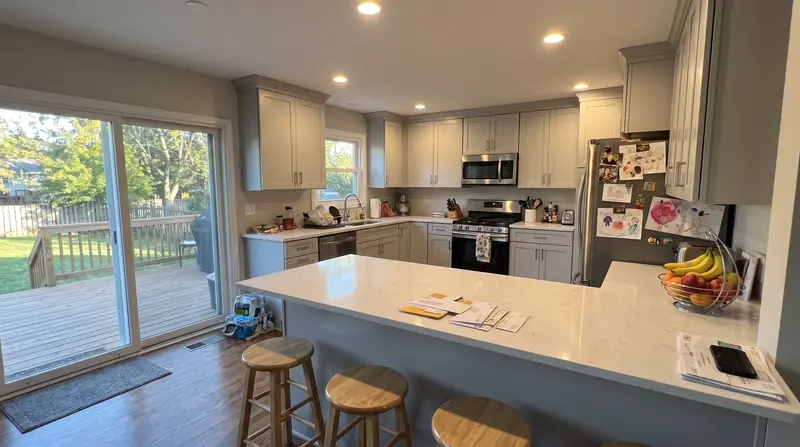
Galley kitchens in bungalows, two flat kitchens, walls opened up into the dining room.
Read more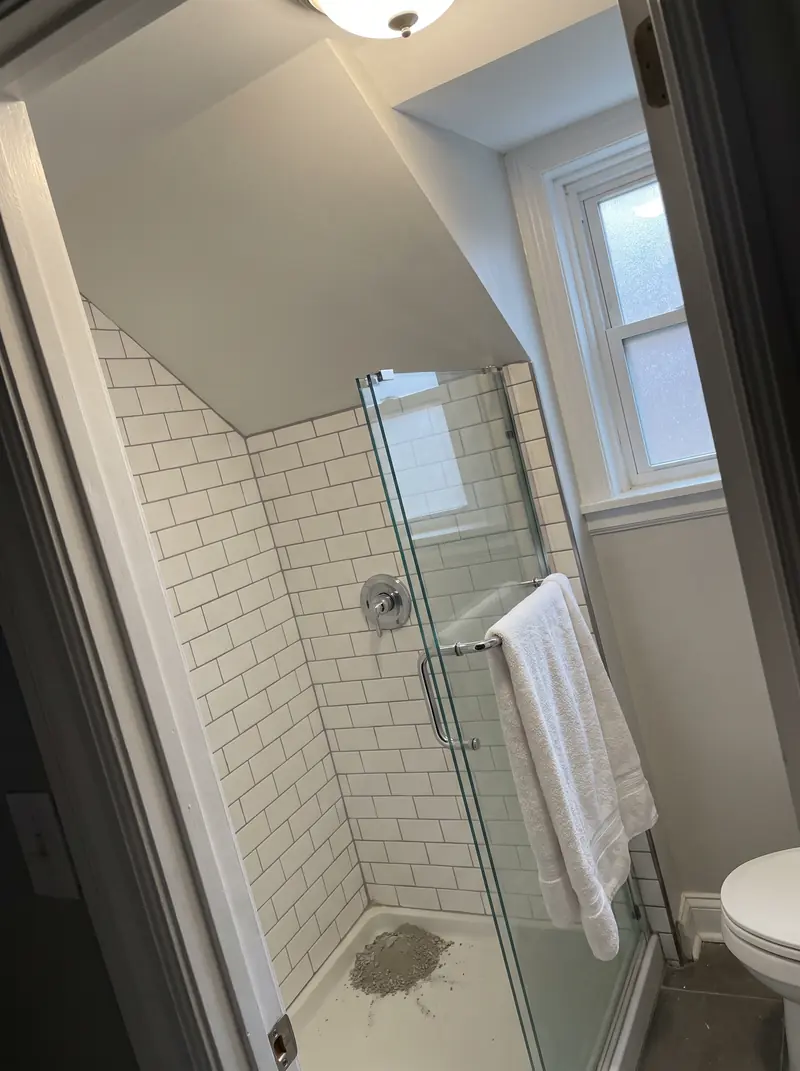
Bathroom remodeling
Bungalow hall baths, cramped upstairs showers, tub to shower conversions.
Read more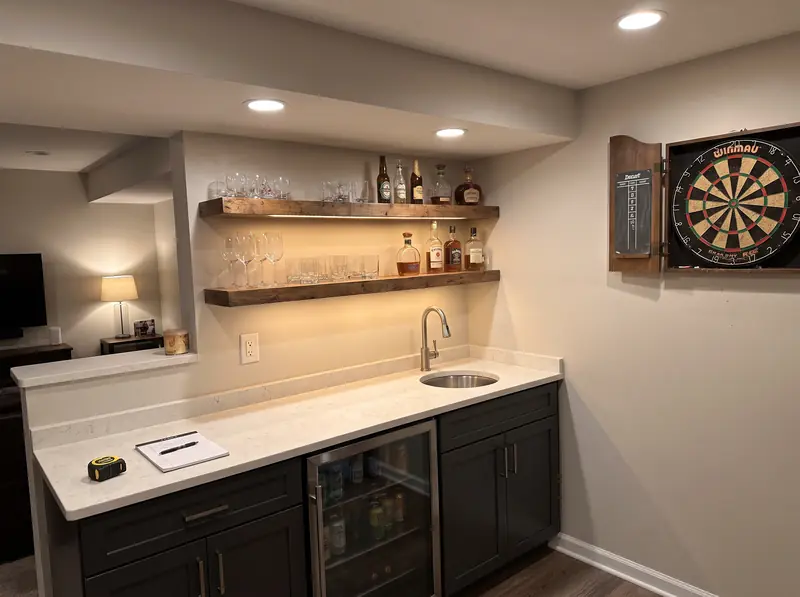
Basement finishing
Family rooms, bedrooms with egress, basement bathrooms, wet bars, theatres and in law suites.
Read more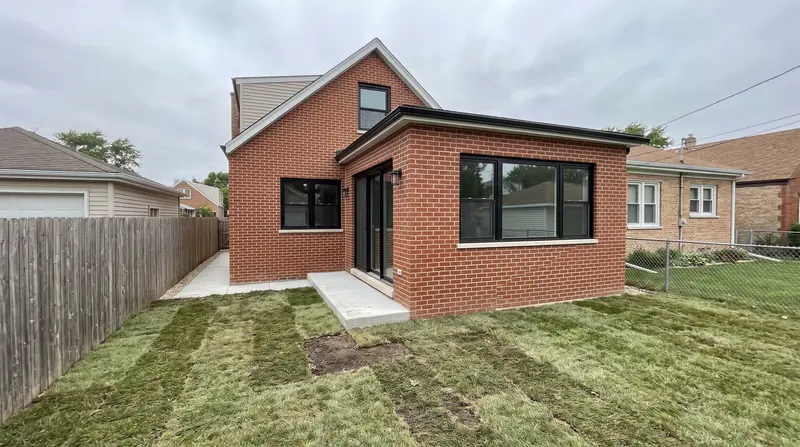
Home additions
Rear additions, full width dormers, second stories and rooms over the garage.
Read more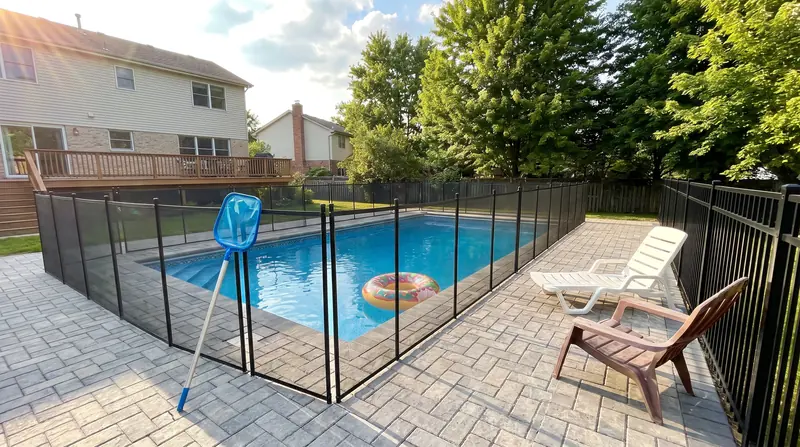
Inground pools
Concrete inground pools in suburban back yards, from dig to first fill.
Read moreCan I put a bedroom in my Tinley Park basement?
Only if it is a walkout. The village's basement remodel requirements say no bedrooms are allowed in basements unless the basement is a walkout style.
How close to the lot line can a pool go in Tinley Park?
No closer than five feet, counting the pool, its equipment, decking, pavers and grading, and only in the rear yard. Nothing can be placed in an easement.
My house was built in 1985. Do new side yard rules limit an addition?
Possibly not. In the R1 to R4 districts, additions to homes that existed on March 1, 2006 can use the side yard minimums in force on that date.
Free walkthrough
A walkthrough in Tinley Park.
We look at what you want to change, tell you what the house and the town will allow, and roughly what it involves. Nothing to sign.
Call (773) 900-4815